
by Stephanie Cooper
Every June, I find myself holding two seemingly contradictory feelings at the same time.
The first is gratitude. Genuine gratitude.
I grew up in a world where I didn’t know you could be both gay and Christian. I spent more nights than I can count at the local bookstore scouring the religion section for a book that might hold the answers, while, when no one was looking, sneaking down to the LGBTQ section to affirm what I already knew in my bones about myself.
Even a couple of decades ago, many churches would not have welcomed my family. Rainbow flags on sanctuaries were rare. Public opinion of queer folks was suspect at best.
I remember when the “gay wedding” episode of Friends aired. Unaware of what was about to come on television, I settled in to watch when my mom burst into the room and quickly turned it off. Confused, I asked why. She told me something inappropriate was about to be shown.
She was talking about two women getting married.
I didn’t fully understand that in the moment. It would take years before I could see how deeply the fear and homophobia surrounding queer people had shaped my understanding of myself.
So we’ve come a long way.
Just one generation ago, the life I live would have been rare. Two moms raising a child. A family like any other family. I am viscerally aware that the life I live is possible because of the brave queer people who came before me. People who marched in the streets. People who demanded rights they were denied. People who imagined a future they might never get to experience themselves. Because of them, my daughter gets to grow up with a Mommy and a Mama.
So when I see pastors posting messages of affirmation, friends sharing Pride content, and churches publicly declaring that queer people are beloved by God, I do not take it for granted. I know how hard-won that visibility has been.
The second feeling is harder to name.
It isn’t exactly resentment. It isn’t exactly exhaustion.
Maybe it is the strange feeling of watching people celebrate a story they know mostly from the outside. A feeling that sometimes, in all the enthusiasm of “Happy Pride!,” the lived reality of being queer gets flattened into something more comfortable, more inspirational, and more easily consumed. A feeling that the people being celebrated can occasionally disappear beneath the celebration itself.
I have wrestled with that tension for years.
I’ve never quite known how to talk about it. Out of fear of seeming ungrateful for the support allies offer, I’ve mostly kept these thoughts close to my chest, or behind closed queer doors where we can speak candidly about what it means to live these lives.
Because the truth is that the celebration of Pride, all of the joy, the techno beats, the drag queens, the rainbows, the chaotic fun, the parades, all of that exists alongside another reality.
When I take my daughter to ballet class, I sometimes notice another mom who is warm and chatty with the other moms, but quietly ushers her child away from my family. Maybe I’m imagining it? Maybe I’m not.
When I sit in a doctor’s office, even in a progressive city like Austin, I still hesitate before casually mentioning my spouse. I find myself wondering whether revealing that my spouse is a woman will subtly change the interaction. Sometimes it does.
And then there are the endless moments of being asked whether Ashley and I are sisters. At the grocery store. “Y’all look so much alike, you must be sisters!” At restaurants. “Y’all sisters, right?” with the curious tone. At rental car counters. “Let me guess, sisters?” At airport gates when we’re trying to sit together. “Y’all are sisters, right?” but this time with a demanding aggression that unsettles us enough that we have to collect ourselves in the bathroom before being on our way.
I’ve often wanted to ask: Do you ask straight couples if they’re brother and sister?
What many people experience as harmless curiosity lands differently when you’ve spent your life navigating a world that assumes heterosexuality as the default setting. For whatever reason, people feel entitled to explanations. Interested in placing us into a category that makes sense to them.
And once the truth is revealed, you never quite know what comes next. Sometimes it’s nervous laughter and apologies. Sometimes it’s a sudden coolness. Sometimes it’s a subtle shift in warmth or attentiveness. Most of the time it’s impossible to prove. It’s just something you feel in your bones.
The hardest part, though, is the uncertainty.
Every interaction carries a small calculation. Is this person safe? Will this be awkward? Will this be uncomfortable? Will this become one of those moments I laugh about later, or one I carry home with me?
So you learn to stay slightly guarded. Slightly prepared. Slightly ready to shield your daughter’s eyes from disapproving glances.
And that is exhausting.
There is a local comedian here in Austin, Roxy Castillo, who does a bit about driving through small-town Texas. She talks about keeping an airbrushed T shirt, two sizes too small, in her car that says “Mama Bear” and a trucker hat that reads “God Bless Texas.” Before she stops for gas, she puts on her “Mama Bear” disguise.
When I saw her perform this bit in a sea of lesbians, the room was alive. We were rolling with laughter, nearly falling out of our seats, it was so funny.
Because we knew exactly what she meant.
I know what it’s like to drive through small-town Texas as a lesbian.
More than that, I know what it’s like to drive through small-town Texas as a lesbian with a wife and an almost five-year-old who doesn’t yet know there are places where you don’t yell, “Hey Mama! Did Mommy go to the bathroom?”
Roxy’s joke is funny because it’s not.
Queer people have learned to laugh through fear, to make comedy out of vigilance, to turn anxiety into stories. Humor is, in many ways, a survival skill. And perhaps because of experiences like these, being gay has taught me something important about what I don’t know. The microaggressions I experience as a queer person have given me just enough insight to know how little I truly understand about the experiences of others.
If this level of vigilance has shaped my life, what must it be like to navigate the world in a Black body? Or an immigrant body?
My experience has not made me an expert in oppression. Quite the opposite. It has taught me humility. It has taught me that being an ally means not only standing up for others, but recognizing the limits of my own understanding. It means doing the work while also acknowledging what I will never fully know.
Which brings me back to Pride.
It is particularly interesting to watch straight friends and acquaintances celebrate Pride Month.
On the one hand, I am genuinely grateful for the straight friends and allies who are thinking about us. Glad they are filling their feeds and newsletters with stories about queer people. Glad they are sharing how queer voices have expanded their understanding of faith, justice, and belonging. True gratitude.
And on the other hand, I sometimes feel something more complicated.
I sometimes wonder whether, in our eagerness to celebrate inclusion, some straight people have unintentionally found a Pride that belongs more to themselves than to the queer people they are celebrating.
And I know how that sounds.
Like I’m ungrateful.
Like I’m standing in the corner of the party complaining because people are finally saying nice things about queer people. Like a bitter dried-up prune (okay, and maybe I am?). And maybe there is a little bitterness mixed in there. But I don’t think bitterness is what I’m actually feeling. I think what I’m feeling is the collision between being celebrated and being misunderstood.
While I feel celebrated, I also sometimes feel objectified. While I feel embraced, I also feel observed. While I appreciate the support, I sometimes feel as though queer people have become symbols in someone else’s story.
And it’s not that I don’t appreciate the allyship. I truly do.
But queer people are particularly good at masking pain with joy. We survive through humor, resilience, creativity, wildness, and celebration. (We do know how to throw a party.) And because of that, I think we sometimes get painted into a rainbow-colored box by the very people who want to protect us.
Every June, when I see posts from straight friends, churches, and pastors wearing “This Pastor Loves You” shirts, I sometimes feel like a piece of the story is missing: The part about the vigilance. The part about the uncertainty. The part about carrying old wounds into ordinary interactions. The part about what it actually feels like to live inside these queer lives.
Maybe that’s why every June I find myself holding those same two seemingly contradictory feelings.
Gratitude and ache.
Celebration and weariness.
Joy and vigilance.
I am grateful that more people are standing with us than ever before. I am grateful for every pastor who preaches inclusion, every church that hangs a rainbow flag, every friend who speaks up when it would be easier to stay silent.
And at the same time, I carry the knowledge that allyship, however sincere, is not the same thing as lived experience.
So maybe I’m just saying the quiet queer part out loud.
I’m reminded of Ruth.
For generations, many of us have read the book of Ruth as the story of Naomi. We celebrate Naomi’s restoration. We marvel at Boaz’s kindness. We point to the ways Ruth’s faithfulness teaches us how to love and welcome others.
And all of that is true. But somewhere along the way, Ruth herself can disappear.
Ruth is the one who leaves everything familiar behind. Ruth is the one who lives as an outsider. Ruth is the one who navigates a world that was not built for her, dependent upon the mercy and goodwill of others.
Yet so often the story becomes about what Ruth teaches everyone else rather than what Ruth experiences.
I sometimes wonder if Pride can feel a little like that.
I am grateful for the allies. I am grateful for the churches, pastors, friends, and family members who choose welcome over exclusion and love over fear. Their support matters. Your support truly matters. It has made my life better.
But every June, I find myself wanting to gently point back to Ruth.
Because queer people are not lessons, symbols, or evidence for someone else’s enlightenment. We are people. We are complicated. We are joyful and wounded, resilient and tired, proud and scared, often all at the same time.
So maybe I am not a dried-up bitter prune after all. (But maybe I am).
But maybe I am just asking for the same thing Ruth deserved: not only to be celebrated for what others learned from her story, but to be seen in the fullness of her own.
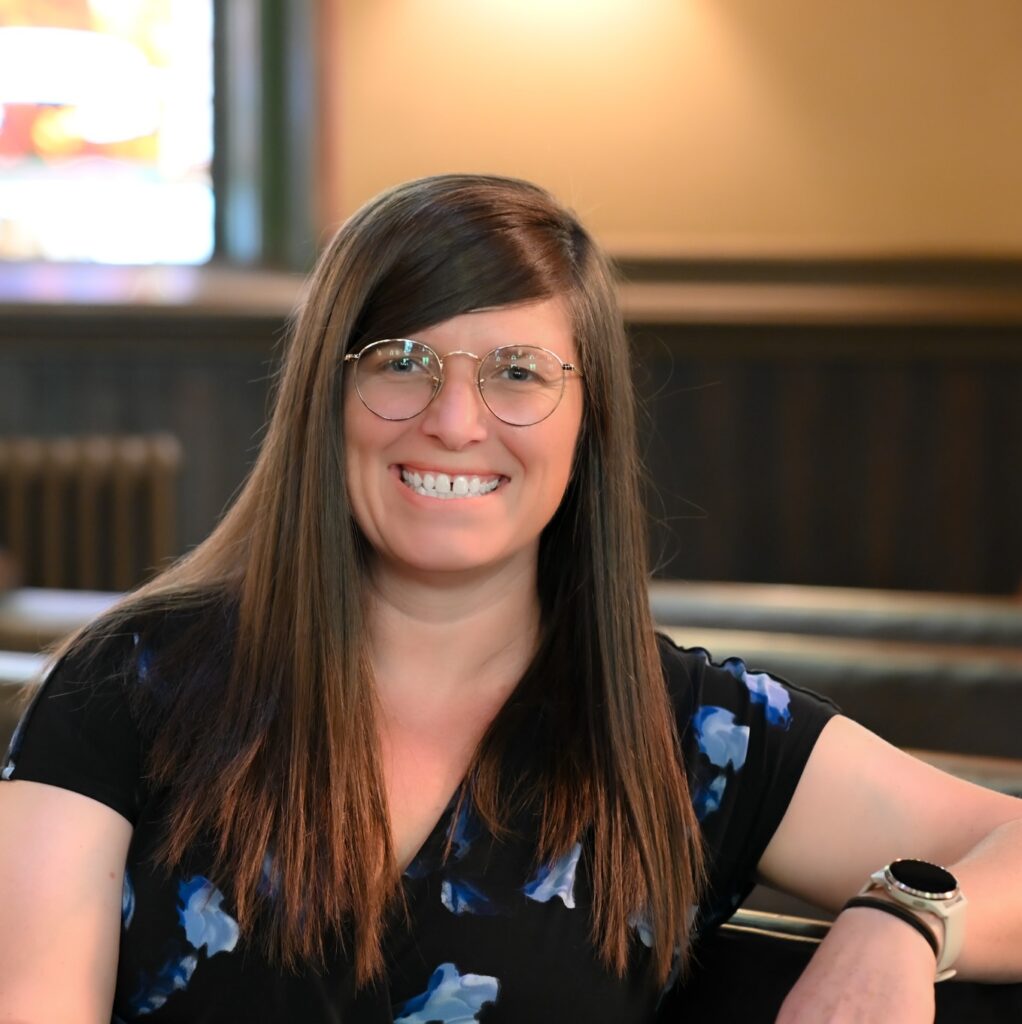
Stephanie True Cooper (she/her) joined the Alliance staff in 2019 after serving churches for over 10 years in Texas, Kentucky, and Virginia. She is a graduate of Georgetown College (’07), Louisville Presbyterian Theological Seminary (’10), and is currently pursuing her Doctor of Ministry from Brite Divinity School. With her wife Ashley and daughter Nell, Stephanie currently resides in Austin, Texas where she enjoys hiking, gardening, and partaking in local fare.

Recent Comments