
by Ken Sehested
NOTE: This blog article was first originally published at https://prayerandpolitiks.org/. To read more of Ken’s work, visit his website.
Prelude. “Come on and raise your voice above the raging seas / We can’t hold our breath forever / When our brothers cannot breathe / Come on and raise your voice above the raging seas / We can’t hold our breath forever / When our sisters cannot breathe.” —“All Good People,” Delta Rae
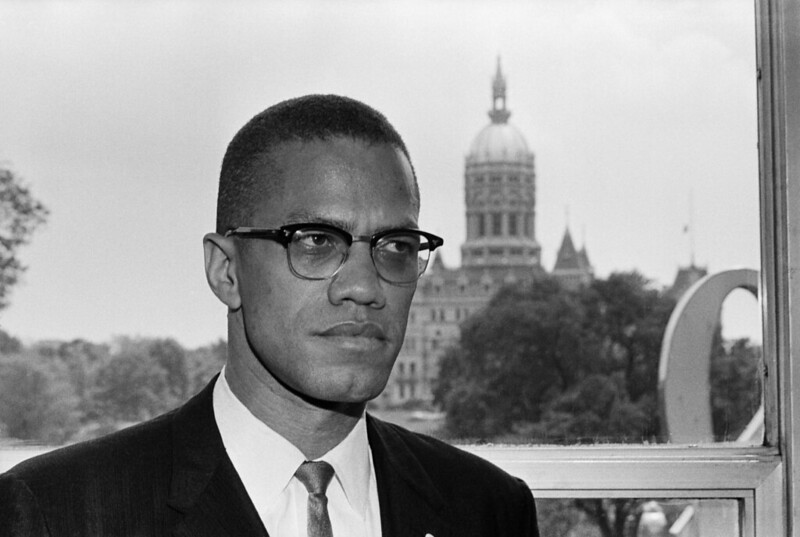
Malcolm X’s Autobiography was the first book that scared me. Here I was, in the transition from adolescence to young adulthood, secretly abandoning my pietist-revivalist rearing in favor of the more verdant fields of liberalism (which helped for a time), and here’s this guy, who I now am ready to befriend, sharply critical of liberal integrationists!
Turns out he was right, unnervingly prescient, not exactly predicting the cases of Rodney King, Trayvon Martin, Michael Brown, Freddy Gray—ad nauseam and likely to be continued—but sensing that “civil rights” could be doled out in limited doses without affecting the underlying patterns of structural disparity. Something deeper is at work sustaining the patterns of discrimination, something more than simple bigotry and prejudice.
However sincere the righteous intent, integration has mostly been a one-way street. Despite curtailed bounds, the African American community had—before the advent of the “war on poverty” urban renewal initiatives—vibrant commercial districts, schools, neighborhoods and other cultural institutions. While the grip on access to bus seats and lunch counters and drinking fountains and even voter registration rights were loosening, the noose of widespread economic disparity was tightening.
The accumulated racial trauma reminds me of that tragic conclusion of Msimangu, in Alan Paton’s memorable novel, Cry the Beloved Country, where he says “I have one great fear in my heart, that one day when they [white South Africans] are turned to loving, they will find we [Blacks] are turned to hating.”
So, what are we to do? How are we to live? What are the new habits needing to be formed?
The first is to get over the assumption that we can do one big march, back one ambitious legislative agenda, read all the right books, and be done with it.
The second habit is to admit that we are “trapped in a history” we do not understand, as James Baldwin wrote to his nephew; that it has to do with our nation’s mythology of manifest destiny (and its warped ideology of “freedom”), both domestically and internationally; and that we must bare our faces to the blistered history that mythology has left in its wake. It’s not a pretty sight: The truth will indeed set you free, but first it will make you miserable.
Third, understanding this venal history will require a look at our awash-in-cash, pay-to-play political process, our imperial military policies, our cannibalizing form of capitalism, a judicial system transforming corporations into persons—and a church for which “freedom” means “don’t expect commitment.”
The fourth habit is to get over the need for personal purity, admitting that we are all enmeshed in structurally tangled relations—racial, economic, national, gender, sexual orientation, relative dis/ability, etc. (we have trouble even naming them all)—that will not dissolve with well-meaning, even heroic personal effort.
The fifth habit, for those in positions of relative power (and it’s a complex equation—all of us are haves and have-nots in relative degrees in various contexts), is to acknowledge that the journey to justice, and its promise of genuine peace mediated by the agency of mercy, will come at a cost. We need to cultivate a beatific vision powerful enough to sustain against the fear-mongering threats that the choice of right-relatedness will entail.
Sixth, we must devote ourselves to initiating and sustaining partnerships—starting close at hand, extending to far away—with those whose destiny is un-manifest, consciously taking incremental steps toward margins of every sort (and you can’t do them all—get over it!), and not only personal partnerships but community partnerships.
Theologian Kelly S. Johnson, in The Fear of Beggars: Stewardship and Poverty in Christian Ethics, unveils a universe of meaning in one single sentence: “The opposite of poverty is not plenty, but friendship.” When folk living with bounty and privilege set out to form relations of solidarity with those who live amid scarcity, it is so, so, so easy to develop a skewed donor-recipient relationship. Patronage and philanthropy are typically only kinder, gentler forms of appeasement and control of those of meager means.
In every instance when justice is established, wealth will most definitely flow from the affluent to the impoverished. But the relief provided is reparation, a returning of what has been stolen, rather than benevolence. The logic of manna is the goal: as characterized by the Israelites’ harvesting instructions during their sojourn in the wilderness: larger families gathered more, smaller families, less; but none had surplus (or, if so, it quickly spoiled) and none were lacking (cf. Exodus 16).
And finally: While the promised Commonweal of God will profoundly rearrange every provision of privilege, our walk to freedom will recognize that colonized neighborhoods and nations are generated by an underlying colonizing of the mind, of the heart, of the will. Thus we must be invested in communities whose labor includes decolonizing of the mind, disarming of the heart, re-abling of the will.
And Jesus disclosed: “I do not call you servants any longer . . . but I call you friends” (John 15:15). This sort of befriending is both manifesto and mandate, a penetration of reality accompanied by the wherewithal to reshape it, a knowing of the truth divulged only in its doing.
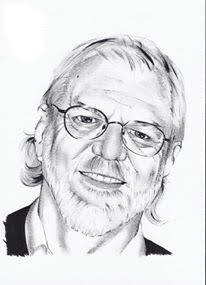
Ken Sehested is the editor/author of the online journal, prayer&politiks. Once upon a time he played football at Baylor University, back when few outside Texas had heard of the place (and its sports teams were the ragamuffins of their conference). And a traveling teenage youth evangelist. No longer a teenager, he is still an evangelist, though his understanding of what it means to follow Jesus has changed considerably.
Ken’s closest brush with jobs people understand were as a typesetter and, later, as a stonemason. Being picky about your work means creating your own, as a full-time mendicant with Seeds magazine (1978) when it became a monthly magazine focusing on food security and world hunger concerns; then as the founding director of the Baptist Peace Fellowship of North America (1984); as founding co-pastor of Circle of Mercy Congregation in Asheville, NC (2001); and now as the electronic ink slinger of this site.
An award-winning activist and author, Ken’s greater honor came when a four year-old granddaughter memorized and recited his favorite Mary Oliver poem as a Father’s Day gift. His most recent books are Peace Primer II: Quotes from Jewish, Christian and Islamic Scripture & Tradition (published by the Baptist Peace Fellowship) and two collections of litanies, prayers and poems, In the Land of the Living and In the Land of the Willing (Wipf & Stock).
He and Nancy live in the French Broad watershed of the southern Appalachian mountains in Asheville, NC.
Recent Comments