
by Sylvia Oberle
The harsh ringing of the phone startled me out of a deep sleep. It was 2:30 a.m. on a cold March day in 2005, and I could barely stumble down the steps before the ringing stopped. Just as I turned around to go back to bed, it started again, and this time I was able to pick it up.
Only to hear the words that my son Andrew, a 21-year-old college junior, had been fatally injured in a car accident on icy roads in his college town of Boone, N.C. In an instant my world was shattered, and I was stricken with gut-wrenching fear and the uncertainty of how I could possibly go on living.
As that day unfolded, people streamed into our home in Winston-Salem, offering words of sorrow, comfort and shocked disbelief. Much of that day and the days following remain a numb blur, but I do remember one exchange vividly.
Willette, a good friend and former work colleague, walked in the door and embraced me with tears in her eyes. Her daughter, Ronnetta, a childhood playmate of Andrew’s, had died in a car accident just four years earlier, and now our shared grief was palpable. Wiping away her tears, Willette said simply: “I chose joy, and I hope that ultimately you can, too.”
Her words remained, but it was desperation, and not joy, that I felt in the ensuing weeks and months as I grappled with how to make sense of it all. Inexplicably, I found no comfort in my long-held Christian beliefs, a faith that had sustained me through many trials to that point.
Instead I began a quest that would stretch on for years to explore other religions and belief systems about how life continues after death and how best to be open to what will come. Bookshelves are now filled with wisdom from ancient mystics; Jewish, Buddhist, and Indigenous writers; concentration camp survivors; and so many theologians and scholars…the list goes on.
By opening my mind and heart to so much more, by willingly going outside my comfort zone, I found myself slowly losing the fear of the unknown and am now able to embrace, with less resistance, whatever God has in store for my life. The struggle continues, but it has been a grace-filled journey that has led me to new callings, new acceptances, and ultimately a renewed feeling of joy and wonderment.
Yes, Willette, I have chosen joy…
So what does my personal story have to do with the Advent celebration of Joy, which we are holding forth this day? I believe it comes from realizing that joy comes from the knowledge of God’s love for us and openly seeking the fullness of it, just as I have tried to do these past two decades.
Author and theologian Henri Nouwen put it this way: While happiness usually depends on circumstances, joy runs deeper. “Joy,” he wrote, “is the experience of knowing that you are unconditionally loved and that nothing – sickness, failure, emotional distress, oppression, war, or even death – can take that love away.” And, though we can often discover joy in the midst of sorrow, it does not simply happen to us.
“We have to choose joy and keep choosing it every day.” Nouwen continued, “It is a choice based on the knowledge that we belong to God and have found in God our refuge and our safety.” 1
This is the sense of joy that Mary is singing about so fiercely in Luke 1, after she has heard the news of her impending conception and journeyed to be blessed by her relative Elizabeth, the expectant mother of John the Baptist.
“My soul magnifies the Lord,
and my spirit rejoices in God my Savior,
for he has looked with favor on the lowly state of his servant.
Surely from now on all generations will call me blessed,
For the Mighty One has done great things for me,
And holy is his name;”
Luke’s passage focuses on themes of God’s mercy and justice, highlighting his tendency to exalt the humble, fill the hungry, and scatter the proud and rich. Mary’s song, also known as the Magnificat, has been seen through history and by some scholars as revolutionary, as it foretells a time when God’s justice will be enacted.
It was a time of great uncertainty for Mary, who faced a bleak future as an unwed, pregnant, teenage girl likely to face serious retribution, and possibly even death, from her community. Yet, as some have described, this young girl sings joyfully, almost spontaneously and defiantly, to her God through her tears, “fists clenched against an unknown future.”
Her status as an outcast reminds us in raw ways of those who are oppressed and cast aside today in ever-so-violent ways. Each day brings us news of people disappearing in immigration raids, starving in war-torn cities, vilified for the color of their skin or for whom they love, daring to be themselves in an increasingly hostile and polarized world.
Our fists, too, sometimes feel clenched against an unknown and uncertain future.
Again, Nouwen’s writings remind us that joy can be found in the midst of even such devastation if we open ourselves up to a broader knowledge of God’s love. That broader knowledge can come from seeking new wisdom and learning from allies and advocates working together to form sanctuaries of mutual support.
It can come from embracing through the Alliance of Baptists ways of resistance to ICE raids, support for our LGBTQ+ colleagues, and walking alongside international partners in Palestine, Zimbabwe, Brazil and Cuba. It can come from vowing to work and live outside our collective comfort zones as we confront racism and injustice.
This Advent Season, I hope, and pray, that we can look for God in the most intimate details of our days and that we can choose joy together.
May it be so.
In loving memory of Andrew Lane (1984-2005)
1The Heart of Henri Nouwen: His Words of Blessing, edited by Rebecca Laird and Michaell J. Christensen, Crossword Publishing Co., 2003
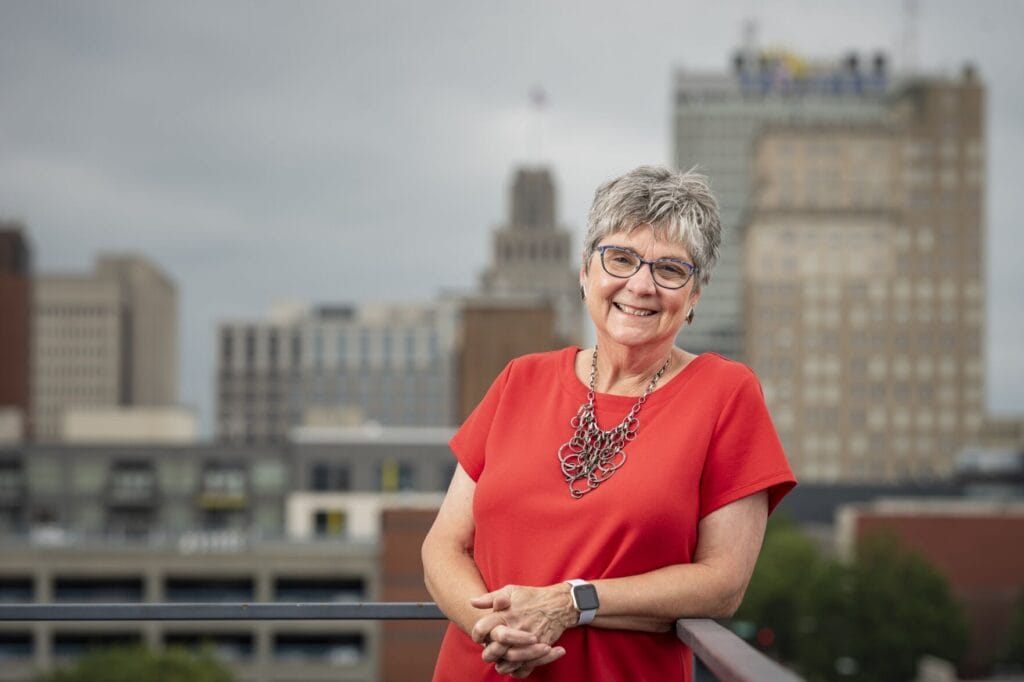
Sylvia Oberle has been an Alliance board member since 2020 and is currently chair of the Personnel Committee. She is a lay leader at Knollwood Baptist Church, an Alliance partner church, in Winston-Salem, NC. A former reporter and editor at the Winston-Salem Journal, she has also worked as a strategic communications consultant and was the founding director of a community-based violence prevention initiative at Winston-Salem State University. She retired in 2016 after 10 years as executive director of Habitat for Humanity of Forsyth County. She continues to be actively engaged in a variety of community advocacy and equity efforts, including helping to lead a monthly issues forum on educational equity sponsored by Knollwood Baptist called Faith in the City. She has a BA in history and political science from Carson-Newman College and an MA in Journalism from the University of North Carolina at Chapel Hill.


Recent Comments