
by Michael Woolf
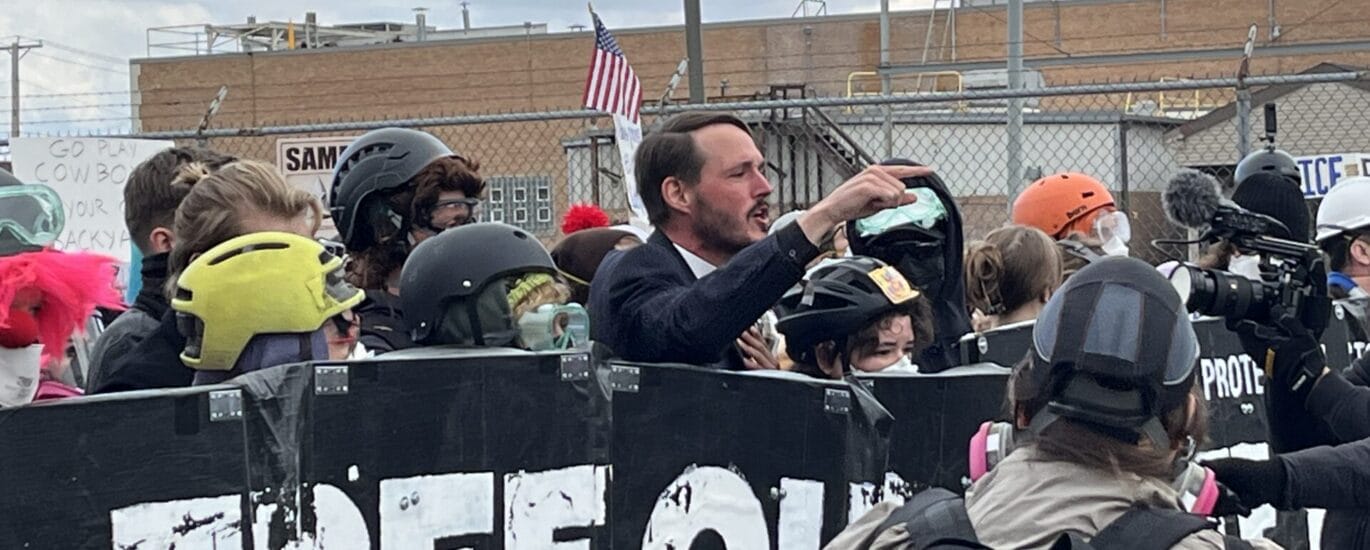
What do we do in a spiritual emergency? That’s what’s presently facing us in Chicago. ICE teargasses our neighborhoods as they kidnap our friends, family, and community members. They are then taken to the Broadview ICE Processing Center outside of Chicago where conditions are tantamount to torture – one meal a day, no access to medication, and unsanitary conditions are common.
I’ve been assaulted twice protesting peacefully at Broadview in a clerical collar. The first time they grabbed my neck and left bruises all over my body. The second time they shot me in the leg with a pepper ball that left swelling and caused my eyes and throat to seal up. If you think that’s bad, they treat immigrants worse. At the date of this writing, 22 people have been killed in ICE custody.
What’s happening here is a spiritual emergency, and how we respond to it will show just what kind of Christians we are. Are we as Martin Luther King Jr. said an “irrelevant social club,” or will we challenge dehumanization and cruelty wherever we find it? I don’t want to be dramatic, but I situate this nation somewhere in 1930s Germany – it is hard not to feel like we are in the middle of a fascist takeover of our country.
My wounds will heal, but will the country’s? Churches have always played a prominent role in acting as the nation’s conscience. What is legal is not always right. Recall that slavery and segregation as well as everything that happened in Nazi Germany were legal.
As the church, we have to stand up to this authoritarianism with whatever strength we can muster. Our numbers have dwindled over the years, but we still command extraordinary power as the nation’s hegemonic religious power.
A word to all my preachers – preaching is not the same as doing something. It can sometimes feel like bringing up an issue from the pulpit is where our activism can begin and end. Preaching is a necessary first step, but it is not sufficient in this time of extreme suffering. We have to do something.
That will look different for each of us – it will be context dependent. Some of us will run food banks or get trained in rapid response teams, others will take the fight directly to detention centers. What matters is that we do not allow these acts to be perpetuated without resistance. Raising our voices is good, but for those of us with privilege, we must be willing to put our bodies between our neighbors and those who would seek to do them harm.
Resistance is impossible alone, but in community everything is possible. We need one another to win this fight, and I am certain we can win it. Martin Buber famously said that “success is not a name for God,” but we know that in the end, love wins. We have to act as people who are assured of that reality, even though it seems so far from our present.
Christians are trained in seeing things for how they really are, as opposed to how the state presents them. Remember that Jesus was crucified as an enemy of the state. We have been unmasking the narratives of power since the very beginning.
We must continue that work. We must never abandon our neighbors. We must always show up for them, no matter the cost. Otherwise, I fear that we will be that “irrelevant social club” that King talked about.
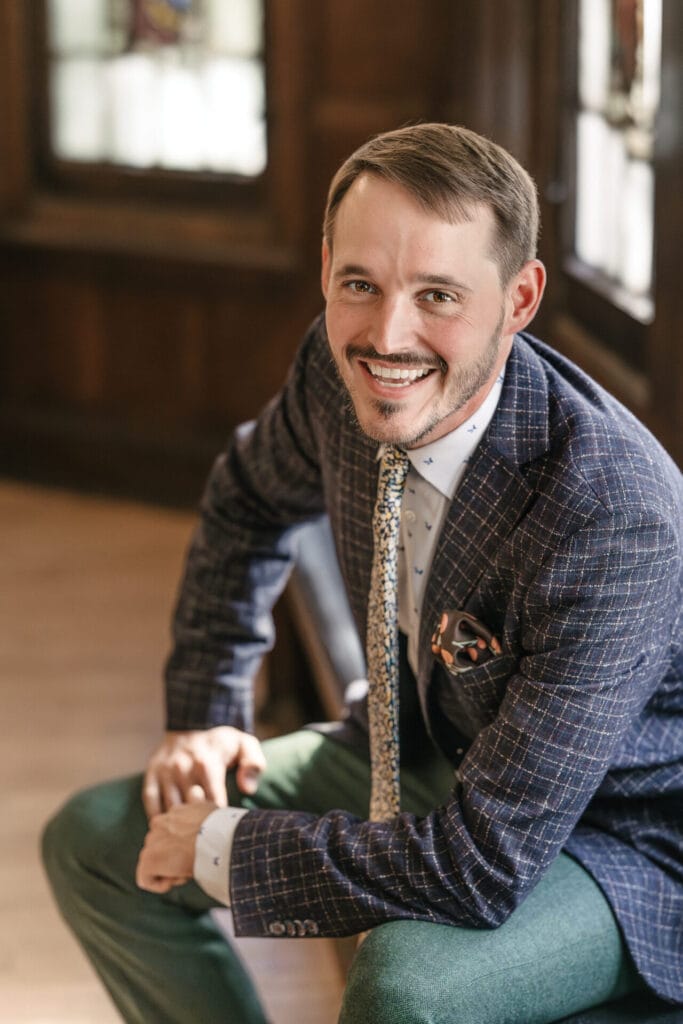
Rev. Dr. Michael Woolf is Senior Minister of Lake Street Church of Evanston and Co-Associate Regional Minister for the American Baptist Churches of Metro Chicago. An Alliance of Baptists and American Baptist pastor, he serves at the intersection of Christian faith, justice, and interfaith solidarity. He is co-author of Confronting Islamophobia in the Church (Judson Press, 2026) and works to equip congregations for courageous, liberative witness.
*Header image courtesy of Michael Woolf.


Recent Comments